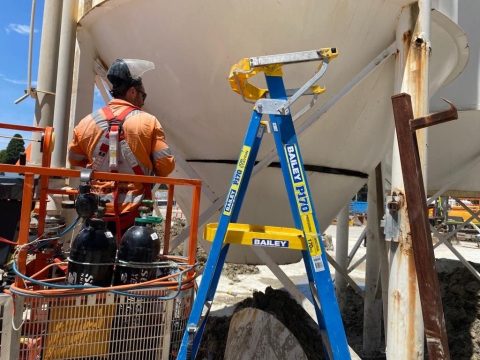
Confined Space Entry on NSW Sites: What You Must Have in Place Before Anyone Goes In
- Mateusz Claude

Confined space work is where site managers get caught out. The paperwork looks fine until SafeWork asks who your standby person was, or an incident review asks how the rescue plan was going to work with nobody trained to run it. This guide covers what NSW law expects you to have in place, in plain terms, before anyone enters a confined space on your site.
First: is it actually a confined space?
Under the WHS Regulation, a confined space is an enclosed or partially enclosed space that isn't designed for people to work in, has restricted entry or exit, and carries a risk from the atmosphere, engulfment or similar hazards. Tanks, pits, silos, sewers, tunnels, some ceiling and underfloor voids. If you're not sure, treat it as one until a competent person says otherwise.
What must be in place before entry
A written risk assessment by a competent person
Not a generic SWMS pulled from the server. It has to address this space, this task, this atmosphere.
A confined space entry permit
Issued before entry, naming who can enter, the work allowed, the controls, and sign-off when everyone is out. No permit, no entry. This is the document SafeWork asks for first.
Atmospheric testing and monitoring
Testing before entry and monitoring during the work where the risk assessment requires it. Oxygen levels, flammable gases, airborne contaminants.
Communication and a standby person
Someone stationed outside the space, in continuous communication with the workers inside, who can raise the alarm and start the emergency response without entering the space themselves.
Rescue arrangements that would actually work
This is the one that fails audits. "Call 000" is not a rescue plan. Emergency services can take 20 minutes or more to arrive and most confined space fatalities involve would-be rescuers. The law expects emergency procedures that can be put into action immediately, with equipment on site and people trained to use it. For higher-risk entries that means a dedicated standby rescue crew with retrieval equipment, breathing apparatus where required, and rehearsed procedures.
The practical problem: keeping this capability on the books
Most contractors don't do confined space work every week. Carrying permanently employed, ticketed confined space workers and rescue crews between jobs is expensive, so the tickets lapse and the equipment gathers dust. That's why crews are commonly brought in per project: entry workers, standby rescue, and the equipment arrive together, current and compliant, for exactly the weeks the programme needs. One of our clients ran a Perfect Hire rescue crew on a North Sydney project for 26 straight weeks for precisely this reason.
Frequently asked questions
Do I need a rescue team for every confined space entry?
You need emergency and rescue arrangements for every entry. Whether that requires a dedicated standby rescue crew depends on the risk assessment. For atmospheres that can deteriorate, vertical entries, or long-duration work, a dedicated crew is the defensible answer.
What tickets should confined space workers hold?
Confined space entry training (commonly RIIWHS202 or MSMPER series units), plus any tickets the task itself needs. Rescue crew members need confined space rescue training and competency on the retrieval and breathing equipment they'll use. We verify all of it before day one.
Can Perfect Hire supply the equipment as well as the crew?
Yes. Tripods, winches, gas monitors, breathing apparatus and the crew that knows how to use them, as one booking.
Confined space work coming up? Call 02 8015 6150 and tell us the entry type, duration and site. You'll have a crew, equipment and a real number on the same call.
Need crews now?